On this page
To start strength training at home, choose a beginner session with clear demonstrations and easier options. Read its equipment and safety instructions first. Pick a realistic time and a backup time. If you are returning after a break, choose for where you are now.
Choose a beginner session before choosing a weight
Look for instruction that answers these questions:
- Who is the session intended for?
- Can you see the setup and each movement clearly?
- Are easier options, pauses and rest guidance explained?
- Are the equipment, warm-up and finish included?
The Fit Fairy training library is a preview. Its structure is visible, but playable training footage is still being prepared. Use an available instructor-led session for your own plan; this article is not a finished workout.
Check your space and equipment
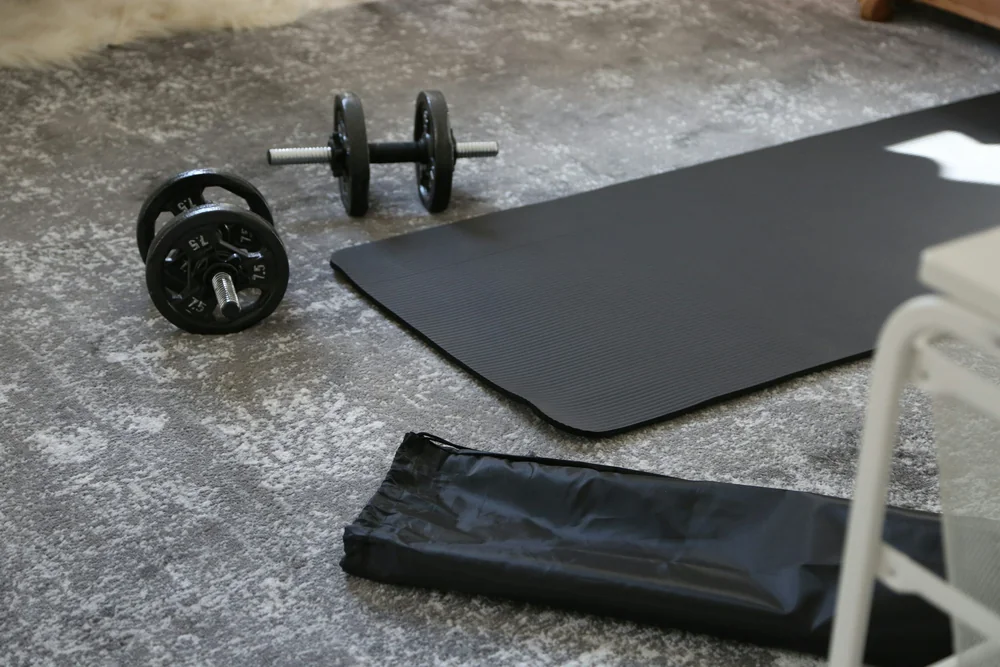
Read the actual equipment list and clear enough space to move without hitting furniture. Bands, dumbbells and bodyweight are not interchangeable in every exercise. Ask a suitably qualified instructor about a starting option if you are unsure. A household object is not automatically a safe substitute.
Make a small first-week plan
Use this fill-in planning template for a session you have actually chosen:
- Session or class: ______.
- Equipment and setup checked: ______.
- Realistic start time and backup time: ______.
- Question for the instructor: ______.
Pause a demonstration when needed. Afterward, note what you understood and what needs explaining. Follow the session's recovery guidance. HHS advises inactive adults to start with small amounts of activity and increase gradually. Read the HHS guidance.
Our strength-progress guide explains what you can notice without a transformation deadline.
Know when to pause or get advice
Stop and seek medical advice for chest pain, dizziness or feeling very unwell. NHS safety advice. Pregnancy, recent surgery, injury or a condition affecting exercise may need individual guidance. This is not condition-specific training.
Call local emergency services immediately for sudden chest pain that does not go away, pain spreading to an arm, neck, jaw, stomach or back, or chest pain with sweating, nausea, light-headedness or shortness of breath. NHS chest-pain guidance
FROM READING TO PRACTICE
See how the method fits together.
Explore the open eight-week demo. Sample content only; training footage, final recipes and enrollment are still being prepared.
See the sample weekFollow Natalia on Instagram